
A Frustrating Problem That's More Common Than You Think
You press the button on your garage door remote, watch the door start its descent, and then — just before it reaches the floor — it reverses and goes right back up. If this scenario sounds familiar, you're not alone. This is one of the most common garage door complaints we hear from homeowners in Aurora, OH, and it's a problem that ranges from a simple five-minute fix to something that requires professional attention.
The good news is that your garage door is actually doing what it's designed to do: protecting you and your family. Modern garage door openers have built-in safety mechanisms that prevent the door from closing on people, pets, or objects. But when those systems malfunction or fall out of alignment, they can trigger false reversals that make your garage door nearly unusable.
Let's walk through the most common reasons your garage door reverses before hitting the floor and what you can do about each one.
1. Misaligned Safety Sensors
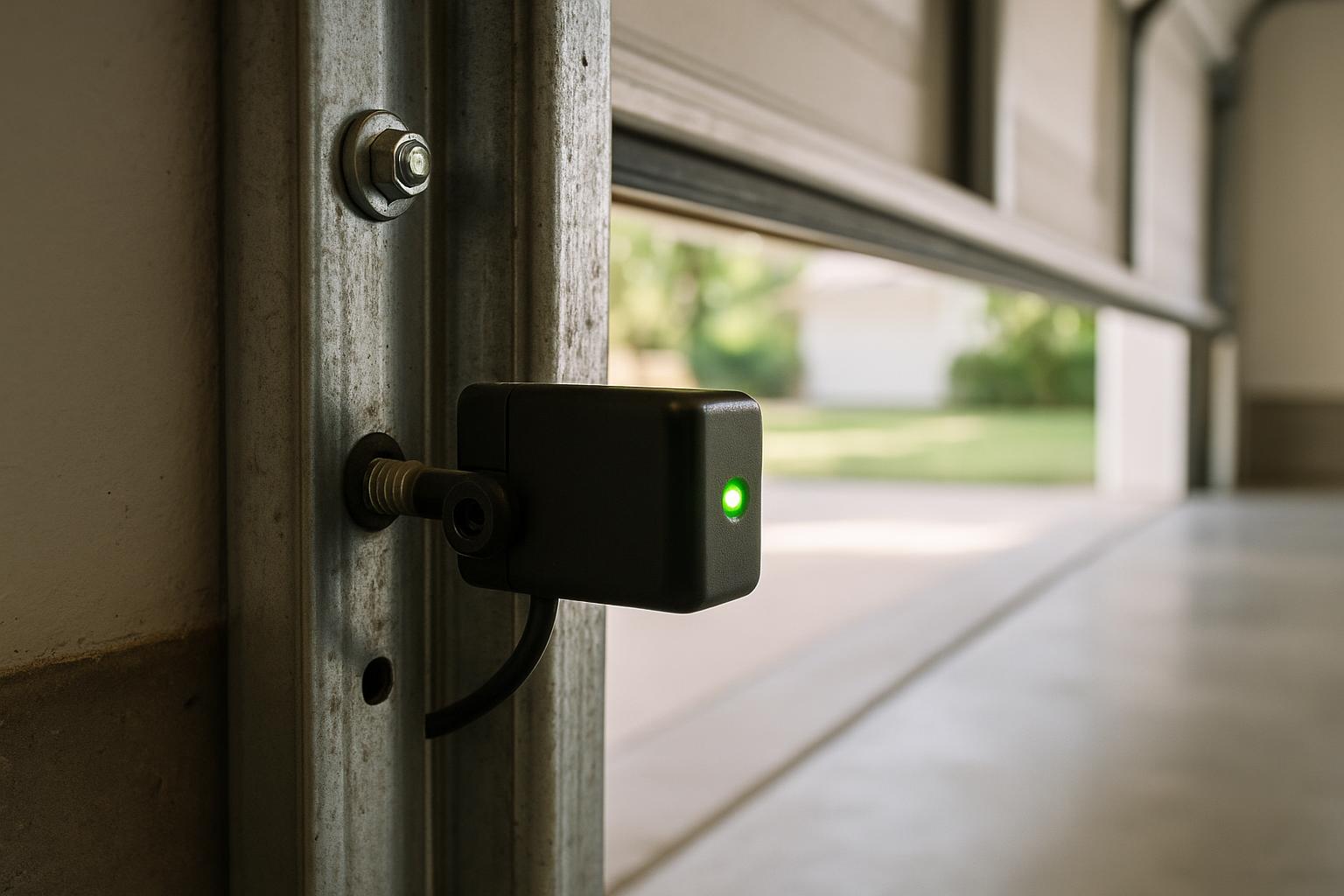
This is the number one cause of garage doors reversing unexpectedly. Federal law has required photoelectric safety sensors on all garage door openers manufactured since 1993. These small sensors sit on either side of your garage door opening, about six inches off the ground, and project an invisible beam between them.
When anything breaks that beam — a child, a pet, a bicycle — the door automatically reverses to prevent injury or damage. The problem arises when the sensors become misaligned, dirty, or damaged. Even a slight bump from a broom handle or a kid's shoe can knock a sensor out of position.
What to Check
- Alignment: Both sensors should have steady green lights (on most models). If one is blinking, it's not receiving the signal from the other sensor. Gently adjust the sensor until the light becomes steady.
- Cleanliness: Wipe the lens of each sensor with a soft cloth. Dust, cobwebs, and grime can block the beam.
- Wiring: Inspect the thin wires running from each sensor back to the opener unit. Look for frayed, cut, or pinched wires, especially near the bottom where they're vulnerable to damage.
- Sunlight interference: In some cases, direct afternoon sunlight can overwhelm the sensor's infrared beam. A simple cardboard shade or repositioning the sensor can solve this.
2. Incorrect Close-Limit Settings
Your garage door opener has adjustable settings that tell it how far the door should travel before it's considered fully open or fully closed. If the close-limit setting is off, the opener may think the door has hit an obstruction when it's actually just reaching the floor. The opener interprets the resistance as a safety issue and reverses.
Most openers have small adjustment screws or dials — usually labeled "down limit" and "up limit" — on the back or side of the motor unit. Adjusting the down limit in small increments can often solve the problem. However, if you're not comfortable working with these settings, it's best to call a professional. Setting the force too high can create a genuine safety hazard.
3. Worn or Broken Springs
Garage door springs do the heavy lifting — literally. They counterbalance the weight of the door so the opener motor doesn't have to work as hard. When a spring is worn, weakened, or broken, the door becomes significantly heavier. The opener senses this extra resistance and may reverse, thinking something is blocking the door's path.
If you notice your door seems sluggish, makes unusual noises, or if you can see a gap in one of the torsion springs above the door, you likely need a spring replacement. This is not a DIY job. Garage door springs are under extreme tension and can cause serious injury if handled improperly. Our team at Aurora Garage Door handles spring replacements regularly and can typically complete the repair in under an hour.
4. Track Problems
The metal tracks on either side of your garage door guide it smoothly up and down. Over time, tracks can become bent, dented, or misaligned. When the rollers encounter a damaged section of track, the door binds or sticks, creating resistance that the opener interprets as an obstruction.
Visually inspect both tracks from top to bottom. Look for obvious bends, dents, or gaps between the track and the wall-mounted brackets. Minor alignment issues can sometimes be corrected by loosening the bracket bolts and gently tapping the track back into position, then retightening. Severely damaged tracks should be replaced by a professional to ensure safe operation.
5. Problems with the Opener Itself
If you've checked the sensors, adjusted the limits, inspected the springs, and examined the tracks, the issue may be with the garage door opener motor or its internal logic board. Openers don't last forever — most have a lifespan of 10 to 15 years depending on usage and maintenance. Components like the motor gear, capacitor, or circuit board can wear out and cause erratic behavior, including random reversals.
Homeowners in Streetsboro, Hudson, Twinsburg, and throughout the Aurora area often call us when they've exhausted their own troubleshooting. Sometimes a repair is all that's needed, but if your opener is aging and repairs are becoming frequent, a new garage door opener installation may be the more cost-effective long-term solution.
6. Weather-Related Issues
Northeast Ohio weather can be tough on garage doors. Cold temperatures cause metal components to contract, which can affect track alignment and spring tension. Ice and snow buildup along the bottom seal can create resistance that triggers a reversal. During winter months, check the bottom of your door for ice accumulation and clear it before attempting to operate the door.
Humidity and temperature swings can also cause wooden garage doors to swell or warp, creating uneven contact with the floor that confuses the opener's safety systems.
When to Call a Professional
Some of the fixes above — cleaning sensors, checking alignment, clearing debris — are perfectly safe for homeowners to handle. But there are clear situations where you should call a garage door professional:
- You suspect a broken or weakened spring
- The door is visibly off-track or sagging on one side
- You've adjusted the limit settings multiple times without success
- The opener is making grinding, buzzing, or clicking noises
- The door reverses inconsistently and you can't identify a pattern
At Aurora Garage Door, we diagnose and fix these issues every day for homeowners across Aurora, Mantua, Solon, and the surrounding communities. We show up on time with the parts and expertise to get your door working properly — usually in a single visit.
Prevent Future Problems with Regular Maintenance
Most garage door reversal issues can be prevented with basic annual maintenance. A professional maintenance visit typically includes lubricating moving parts, testing and adjusting spring tension, inspecting tracks and rollers, tightening hardware, and testing the safety reversal system. Think of it like an oil change for your garage door — a small investment that prevents expensive repairs down the road.
If your garage door keeps reversing and you've run out of ideas, don't let the frustration build. Give us a call or schedule a service appointment. We'll get to the bottom of the problem and have your door operating safely and reliably again.