
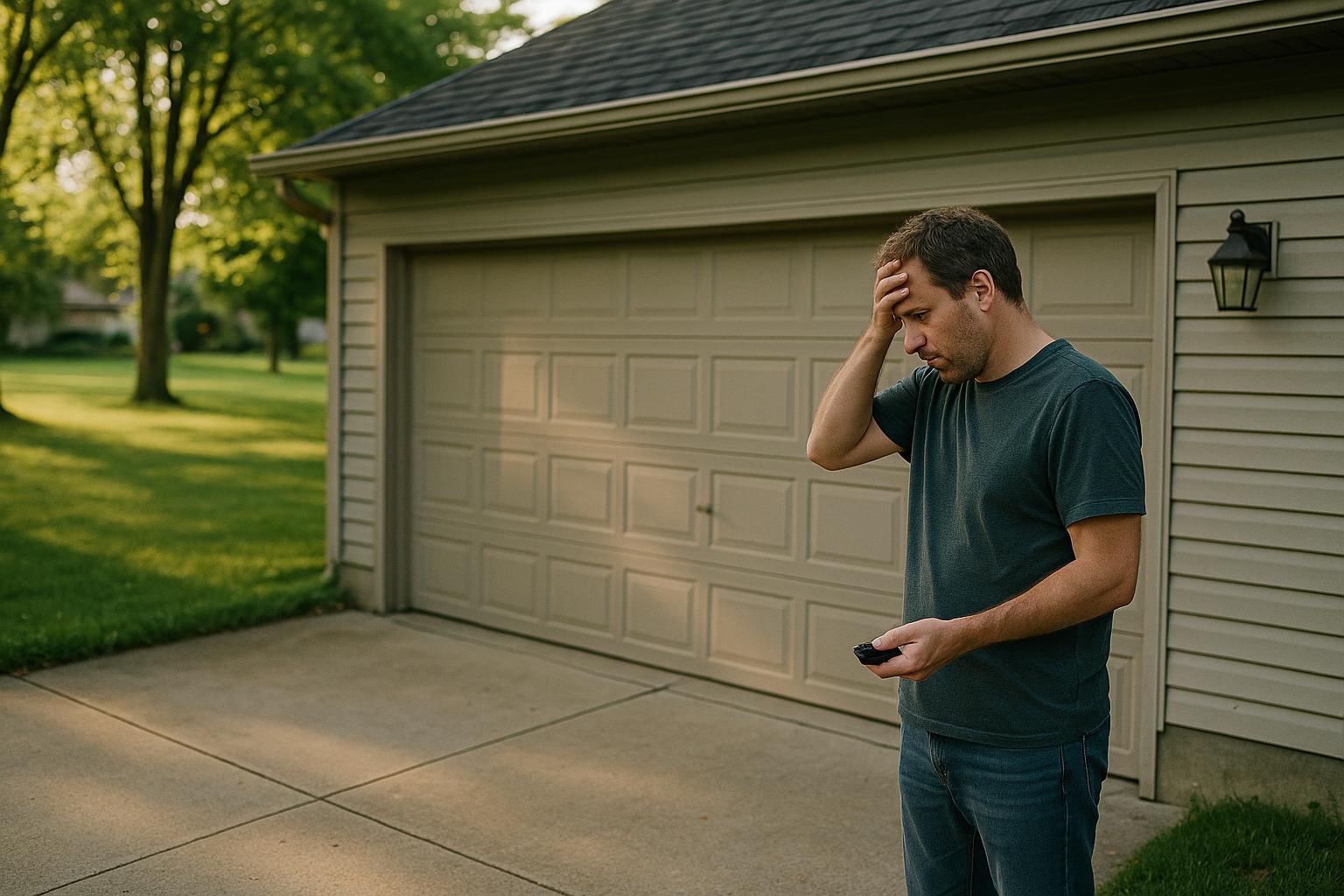
You're Running Late — and Your Garage Door Won't Budge
It's a scenario that plays out in driveways across Aurora more often than you'd think. You press the button on your garage door opener, hear a click or a hum, and… nothing. The door won't move. Or maybe it lifts a few inches and drops back down. Either way, you're stuck — and you're already running behind.
A garage door that refuses to open in the morning is one of the most common calls we get at Aurora Garage Door. The good news is that most causes are identifiable and fixable. Some you can troubleshoot yourself, while others require a trained technician. Let's walk through the most likely reasons your garage door won't cooperate when you need it most.
1. Cold Weather Has Affected the Components
Living in Northeast Ohio means dealing with temperature swings that can wreak havoc on mechanical systems. When overnight temperatures drop significantly, several things can happen to your garage door:
- Metal components contract: Tracks, springs, and hinges are all affected by cold. Contraction can cause binding or misalignment that prevents smooth operation.
- Lubricant thickens: The grease and oil on your springs, rollers, and tracks can become thick and sluggish in cold weather, creating extra resistance.
- Weatherstripping freezes to the ground: If moisture collects under the bottom seal and freezes overnight, your door can literally be frozen to the garage floor.
If you suspect your door is frozen to the floor, don't keep pressing the opener button. This can burn out the motor or strip the gears. Instead, try gently breaking the seal with a flat shovel or pouring warm (not boiling) water along the base of the door. Once free, clear away any standing water to prevent it from happening again.
2. The Opener's Power Source Is Disrupted
Before you assume the worst, check the basics. It sounds simple, but a surprising number of garage door problems come down to power issues:
- The opener is unplugged: Someone may have accidentally disconnected it, or a plug may have worked its way loose from the outlet.
- A circuit breaker tripped: Check your electrical panel. A tripped breaker can cut power to the garage without affecting the rest of your home.
- The outlet is dead: Test the outlet with another device. GFCI outlets in garages can trip independently, especially after storms or power surges.
Restoring power often solves the problem immediately. If breakers keep tripping, however, that could indicate a wiring issue that needs professional attention.
3. The Remote or Wall Button Isn't Working
If the opener has power but still isn't responding, the issue might be with the device you're using to activate it:
- Dead batteries in the remote: This is the most common and easiest fix. Replace the batteries and try again.
- Signal interference: Nearby electronics, LED light bulbs in the opener, or even a neighbor's new device can sometimes interfere with the remote's frequency.
- The wall button is faulty: Try using both the remote and the wall-mounted button. If one works and the other doesn't, you've narrowed down the problem.
If neither the remote nor the wall button triggers the opener, the issue is more likely with the opener unit itself or the door's mechanical system.
4. The Safety Sensors Are Misaligned or Blocked
Every modern garage door opener has photo-eye sensors mounted near the bottom of the door tracks on either side. These sensors detect obstructions and prevent the door from closing on people, pets, or objects. But they can also prevent the door from operating correctly if they're misaligned.
Check for these common sensor issues:
- Something is blocking the beam: A broom, a box, leaves, or even a cobweb can interrupt the sensor's line of sight.
- The sensors are dirty: Wipe the lenses with a clean cloth. Dust and grime build up over time, especially in garages.
- One sensor is bumped out of alignment: The indicator lights on each sensor should be steady. If one is blinking, it's likely not aligned with its partner. Gently adjust it until the light holds steady.
Sensor problems typically affect closing more than opening, but in some opener models, a sensor fault can lock out all operation until the issue is resolved.
5. The Door Is Off Its Tracks
If your garage door has come off its tracks — even slightly — it can bind up and refuse to move. This can happen due to an impact (like bumping the track with a car or heavy object), worn rollers popping out of the track, or loose track brackets.
Do not attempt to force a door that's off its tracks. A garage door under spring tension is extremely heavy and dangerous when it's not properly guided. This is a situation where you should call a professional right away. Our team at Aurora Garage Door handles track repairs regularly and can get your door back in safe working order quickly.
6. A Broken Spring or Cable
If you hear a loud bang from your garage — sometimes in the middle of the night — and then the door won't open the next morning, there's a strong chance a torsion spring has snapped. Springs bear the majority of the door's weight, and without them, the opener motor simply can't lift the door.
Signs of a broken spring include:
- A visible gap in the spring mounted above the door
- The door feels extremely heavy when you try to lift it manually
- The opener strains, hums, or barely moves the door
Spring replacement is not a DIY job. The tension involved is dangerous, and improper handling can cause serious injury. If you suspect a broken spring, call a qualified technician to inspect and replace it safely.
7. The Disconnect Switch Was Engaged
Most garage door openers have a manual disconnect — usually a red cord or handle hanging from the opener rail. This allows you to operate the door manually during a power outage. If someone pulled this cord and didn't re-engage it, the opener will run but the door won't move because the trolley is disconnected from the door.
To fix this, simply pull the cord back toward the opener or manually slide the trolley until it clicks back into the carriage. Close the door fully before re-engaging to ensure proper alignment.
When to Call a Professional
Some of these issues — dead batteries, frozen weatherstripping, a tripped breaker — are quick fixes any homeowner can handle. But if you're dealing with broken springs, off-track doors, motor problems, or electrical issues, it's time to call in a pro.
At Aurora Garage Door, we serve homeowners throughout Aurora, Streetsboro, Hudson, Twinsburg, Solon, and Mantua with fast, dependable garage door repair. We understand that a door that won't open in the morning isn't just an inconvenience — it can disrupt your entire routine and leave your home less secure.
If your garage door isn't cooperating, don't force it. Give us a call and we'll diagnose the problem, explain your options, and get your door working reliably again — often the same day.