
Your Garage Door Is Trying to Tell You Something
You press the button, and instead of the smooth hum you're used to, your garage door lets out a grinding screech that makes the neighbors look over. Or maybe it's a rhythmic banging, a high-pitched squeal, or a rattling that vibrates through the walls of your home. Whatever the sound, one thing is clear: something isn't right.
Noisy garage doors are one of the most common complaints we hear from homeowners in Aurora and the surrounding communities. The good news is that most garage door noises point to identifiable — and fixable — problems. The key is understanding what each sound means so you can address the issue before it turns into an expensive repair or a complete door failure.
Common Garage Door Noises and What They Mean
Grinding or Scraping
A grinding noise usually indicates metal-on-metal friction where it shouldn't exist. The most common culprits are:
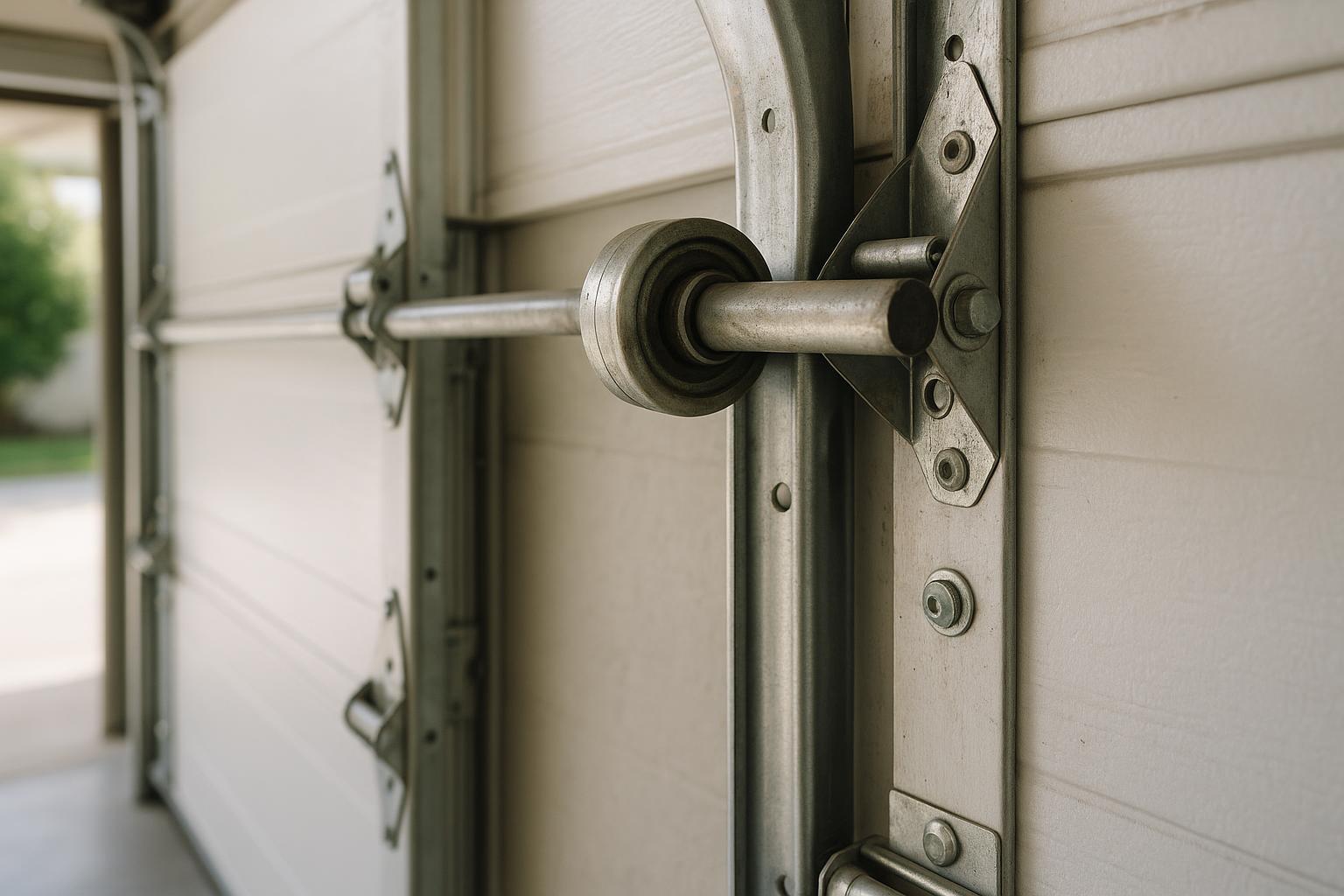
- Worn rollers: Steel rollers wear down over time and can grind against the track. Nylon rollers are a quieter, longer-lasting alternative that many Aurora homeowners choose when upgrading.
- Misaligned tracks: If the tracks that guide your door have shifted even slightly, the door can scrape against them as it moves. This creates a harsh grinding sound and can cause further damage if left unaddressed.
- Dry bearings: The bearings in your rollers, pulleys, and hinges need lubrication to function smoothly. Without it, you'll hear grinding every time the door operates.
Squealing or Squeaking
High-pitched squealing is almost always a lubrication issue. Your garage door system has dozens of moving metal parts — hinges, rollers, springs, pulleys, and the opener chain or screw drive. When these components dry out, they produce that unmistakable squeal.
Ohio's seasonal temperature swings can accelerate this problem. The cold winters in Aurora cause metal to contract, and summer heat causes expansion. These constant changes can work lubricant off surfaces faster than you might expect. A regular maintenance schedule that includes proper lubrication can keep the squealing at bay.
Banging or Popping
A loud bang or pop when your garage door operates can be alarming — and for good reason. This sound often points to:
- Torsion spring issues: If a spring is nearing the end of its life, it can make popping or banging sounds as it struggles under tension. A spring that actually breaks will produce a single, very loud bang — often mistaken for something falling in the garage.
- Panel problems: Damaged or warped panels can pop or bang as they flex during operation, especially in older wooden doors that have absorbed moisture over the years.
- Loose hardware: Bolts, brackets, and hinges can loosen over time due to the constant vibration of daily use. A loose component can bang against the door or track with each cycle.
Rattling or Vibrating
Rattling is one of the more common — and fortunately, often one of the easier — noises to fix. It typically comes from:
- Loose nuts and bolts: The vibration from thousands of open-and-close cycles gradually loosens hardware throughout the system.
- A loose chain on the opener: Chain-drive openers can develop slack over time, causing the chain to rattle against the rail.
- Unsecured opener mounting: If the bracket that holds your garage door opener to the ceiling has loosened, the entire unit can vibrate and rattle during operation.
Clicking or Ticking
A repetitive clicking sound often comes from the garage door opener rather than the door itself. It could mean the opener's drive gears are wearing down, the trolley carriage is damaged, or the opener's logic board is sending signals but struggling to engage the motor. If your opener clicks but the door doesn't move, the problem likely requires professional diagnosis.
What You Can Do at Home
Some noisy garage door issues are well within the range of basic homeowner maintenance:
- Tighten all visible hardware. Use a socket wrench to snug up bolts on hinges, brackets, and the track mounting hardware. Don't overtighten — just make sure nothing is loose.
- Lubricate moving parts. Use a garage door-specific lubricant or white lithium grease on rollers, hinges, springs, and the opener chain or screw. Avoid WD-40 for this purpose — it's a solvent, not a long-term lubricant.
- Inspect the rollers. Look for visible wear, cracks, or chips. If your steel rollers are worn down, consider having them replaced with nylon rollers for a quieter, smoother operation.
- Check the tracks. Look for obvious bends, gaps between the track and the wall, or debris caught in the track. Wipe the inside of the tracks clean with a cloth.
When to Call a Professional
While basic maintenance can solve many noise issues, some problems require the tools, training, and experience of a garage door technician. You should call a professional if:
- The noise is coming from the springs. Torsion springs are under extreme tension and can cause serious injury if handled improperly. This is never a DIY job.
- Your tracks are visibly misaligned. Adjusting tracks involves loosening and repositioning heavy components while the door is under load — it's risky without proper equipment.
- The opener is making internal noises like clicking, humming without movement, or grinding from inside the motor housing. These issues often involve gear replacement or electrical components.
- You've lubricated and tightened everything and the noise persists. Persistent noise after basic maintenance usually means there's a deeper mechanical issue that needs expert attention.
- The noise is accompanied by other symptoms — the door moving unevenly, shaking, moving slower than usual, or not closing completely.
Don't Ignore the Warning Signs
It's tempting to turn up the car radio and ignore a noisy garage door, but those sounds are warning signs. A grinding roller today can become a door that jumps off its track next month. A popping spring can snap without warning. Addressing noise early almost always saves money compared to waiting for a full breakdown — especially when you need emergency service on a cold January night in Aurora.
Regular maintenance is the best way to prevent noise problems before they start. Most garage door professionals recommend a full inspection and tune-up at least once a year. During a maintenance visit, a technician will lubricate all moving parts, tighten hardware, inspect springs and cables, test the balance of the door, and check the opener's safety features.
Quiet Your Garage Door Today
If your garage door has been making noises that concern you, don't wait for the problem to get worse. At Aurora Garage Door, we help homeowners throughout Aurora, Mantua, Streetsboro, Hudson, Twinsburg, and Solon diagnose and fix noisy garage doors every day. Whether you need a simple tune-up, roller replacement, or a more involved repair, we'll identify the source of the noise and get your door running smoothly and quietly again. Give us a call to schedule an inspection — your ears and your neighbors will thank you.