
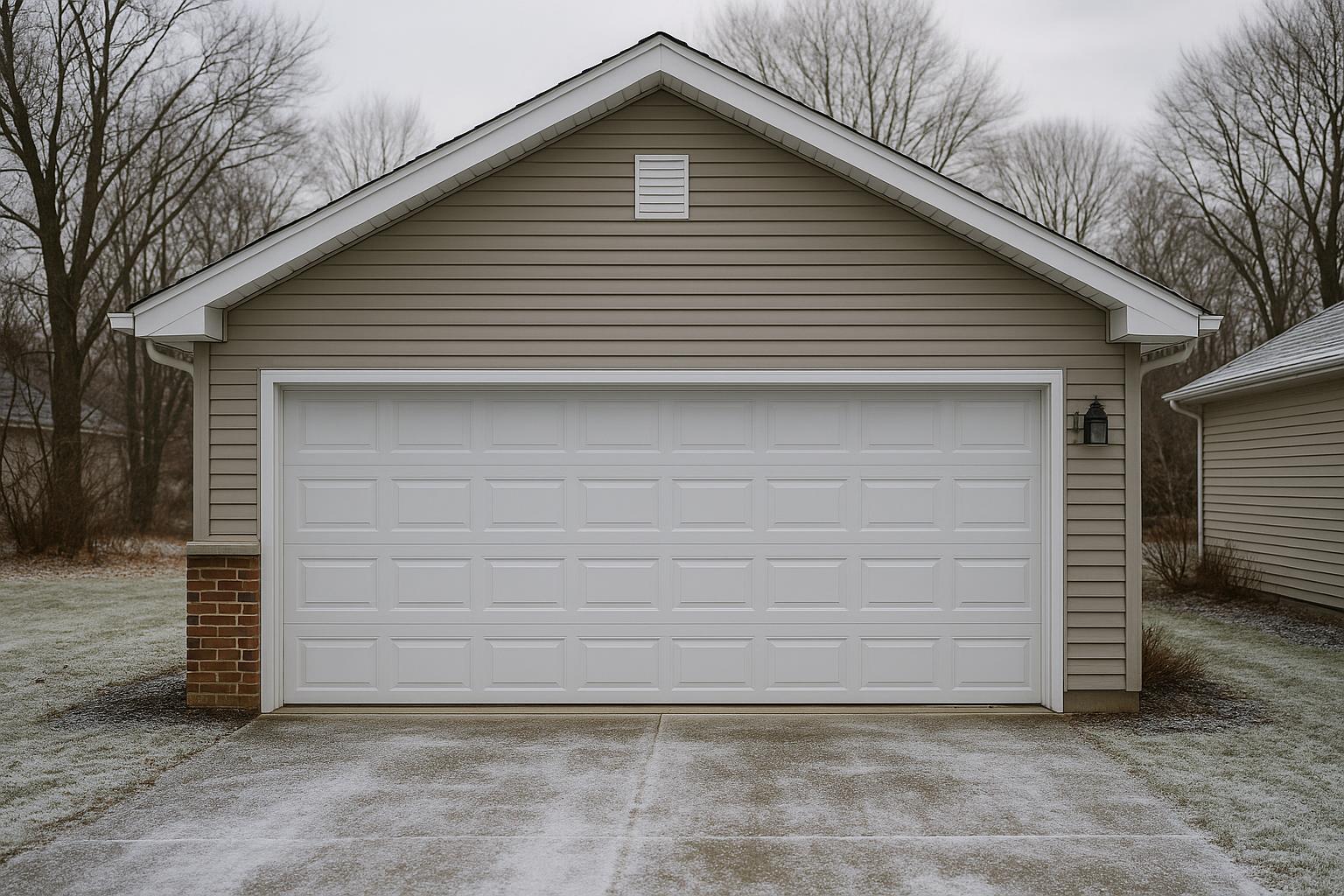
Winter Is Hard on Garage Doors — Here's How to Get Ahead of It
If you've lived in Aurora, OH for even one winter, you know the cold doesn't mess around. Temperatures regularly dip below freezing, ice builds up overnight, and snow seems to find its way into every crack and crevice. Your garage door — the largest moving part of your home — takes the brunt of all of it.
A garage door that works perfectly in September can start sticking, freezing shut, or losing heat by December. The good news is that a little preparation now can save you from emergency repair calls later. Here's a practical guide to winterizing your garage door so it stays reliable all season long.
Inspect and Replace Worn Weatherstripping
The rubber weatherstripping along the bottom and sides of your garage door is your first line of defense against cold air, moisture, and pests. Over time, it cracks, hardens, and pulls away — especially after enduring Northeast Ohio's freeze-thaw cycles.
Walk around your closed garage door and look for gaps where daylight is visible. If you can see light coming through, cold air and snow are getting in too. Replacing worn weatherstripping is one of the most affordable upgrades you can make, and it has an immediate impact on your garage's temperature and energy efficiency.
Don't Forget the Threshold Seal
A threshold seal sits on the garage floor where the door meets the ground. If you don't have one, or if yours is worn flat, adding a new one can block water, leaves, and drafts from sneaking underneath. This is especially helpful for homes in Aurora where driveways slope toward the garage.
Lubricate All Moving Parts
Cold weather thickens old lubricant and causes metal components to contract, which leads to stiff, noisy operation. Before winter sets in, apply a silicone-based or lithium-based garage door lubricant to the following parts:
- Hinges
- Rollers (if they're metal, not nylon)
- Springs
- Bearing plates
- The lock mechanism
Avoid using WD-40 as a long-term lubricant — it's a solvent, not a true lubricant, and it won't hold up through the winter. A proper garage door lubricant stays in place and keeps everything moving smoothly even when temperatures drop into the single digits.
Test the Auto-Reverse Safety Features
Your garage door opener has two critical safety systems: the mechanical auto-reverse and the photoelectric sensors near the floor. Both can be affected by winter conditions.
Snow, ice, and salt buildup can block or misalign your sensors, causing the door to refuse to close or reverse unexpectedly. Clean the sensor lenses with a soft cloth and make sure they're properly aligned. Then test the mechanical reverse by placing a 2x4 flat on the ground where the door closes — the door should reverse immediately upon contact.
If either system isn't working correctly, don't disable it. These features protect your family, your pets, and your vehicles. Call a professional to diagnose and fix the issue properly.
Check the Door Balance
An unbalanced garage door puts extra strain on the opener and the springs, and winter only makes this worse. To check the balance, disconnect the opener by pulling the emergency release handle, then manually lift the door halfway. It should stay in place on its own.
If the door slides down or shoots up, the springs are likely out of balance. This is not a DIY fix — garage door springs are under extreme tension and can cause serious injury. A trained technician can adjust or replace the springs safely.
Insulate Your Garage Door
If your garage door isn't insulated, your garage becomes essentially an outdoor space in the winter. This matters more than most people realize, because many homes in Aurora have water heaters, pipes, or living spaces adjacent to the garage. A freezing garage can lead to frozen pipes, higher heating bills, and uncomfortable rooms above or beside it.
There are a few options for insulation:
- Insulation kits: Foam board or reflective insulation panels that you cut and fit into each door panel. These are a budget-friendly option for existing doors.
- Insulated garage doors: If your door is aging and you're considering a replacement, upgrading to a factory-insulated door with a high R-value is the most effective long-term solution.
Even modest insulation can raise your garage temperature by 10 to 20 degrees, which makes a real difference during an Aurora winter.
Clear the Tracks and Inspect the Hardware
Dirt, debris, and even small stones can accumulate in your garage door tracks over the fall months. Before winter, wipe down the tracks with a damp cloth to remove buildup. While you're at it, visually inspect the tracks for dents, bends, or misalignment that could cause the door to stick or jump off track when ice and cold make everything less forgiving.
Also take a few minutes to tighten any loose bolts and brackets. The vibration from daily use gradually loosens hardware, and a bolt that's slightly loose in October can become a real problem by February.
Keep the Area Around Your Garage Door Clear
This sounds simple, but it's one of the most common winter garage door issues we see in Aurora and nearby communities like Streetsboro and Hudson. Snow and ice accumulate at the base of the door, and if it freezes to the ground, forcing the door open can damage the weatherstripping, the bottom panel, or even the opener.
After a snowfall, clear the snow away from the base of your garage door before opening it. If the door is frozen to the ground, do not keep hitting the opener button. Instead, carefully break the ice seal with a flat shovel or use a heat source like warm water to free the door. Then open it manually before re-engaging the opener.
Schedule a Professional Maintenance Visit
The steps above are great for homeowners who want to stay proactive, but there's no substitute for a professional inspection. A trained technician can spot issues you might miss — worn cables, hairline cracks in springs, subtle misalignments — and address them before they turn into mid-winter emergencies.
At Aurora Garage Door, we recommend scheduling a maintenance visit in the fall so your door is fully prepared before the worst weather hits. We serve homeowners throughout Aurora, Mantua, Twinsburg, Solon, and the surrounding area, and we know exactly what Northeast Ohio winters demand from a garage door system.
Don't Wait for the First Freeze
Winter garage door problems almost always start as small issues that get ignored until the cold makes them worse. A little preventive care now — lubricating, insulating, inspecting, and sealing — can keep your garage door running reliably through even the harshest months.
If you're not sure where your garage door stands heading into winter, or if you've already noticed something that doesn't seem right, give us a call. We'll take a look, give you an honest assessment, and make sure your garage door is ready for whatever this winter brings.